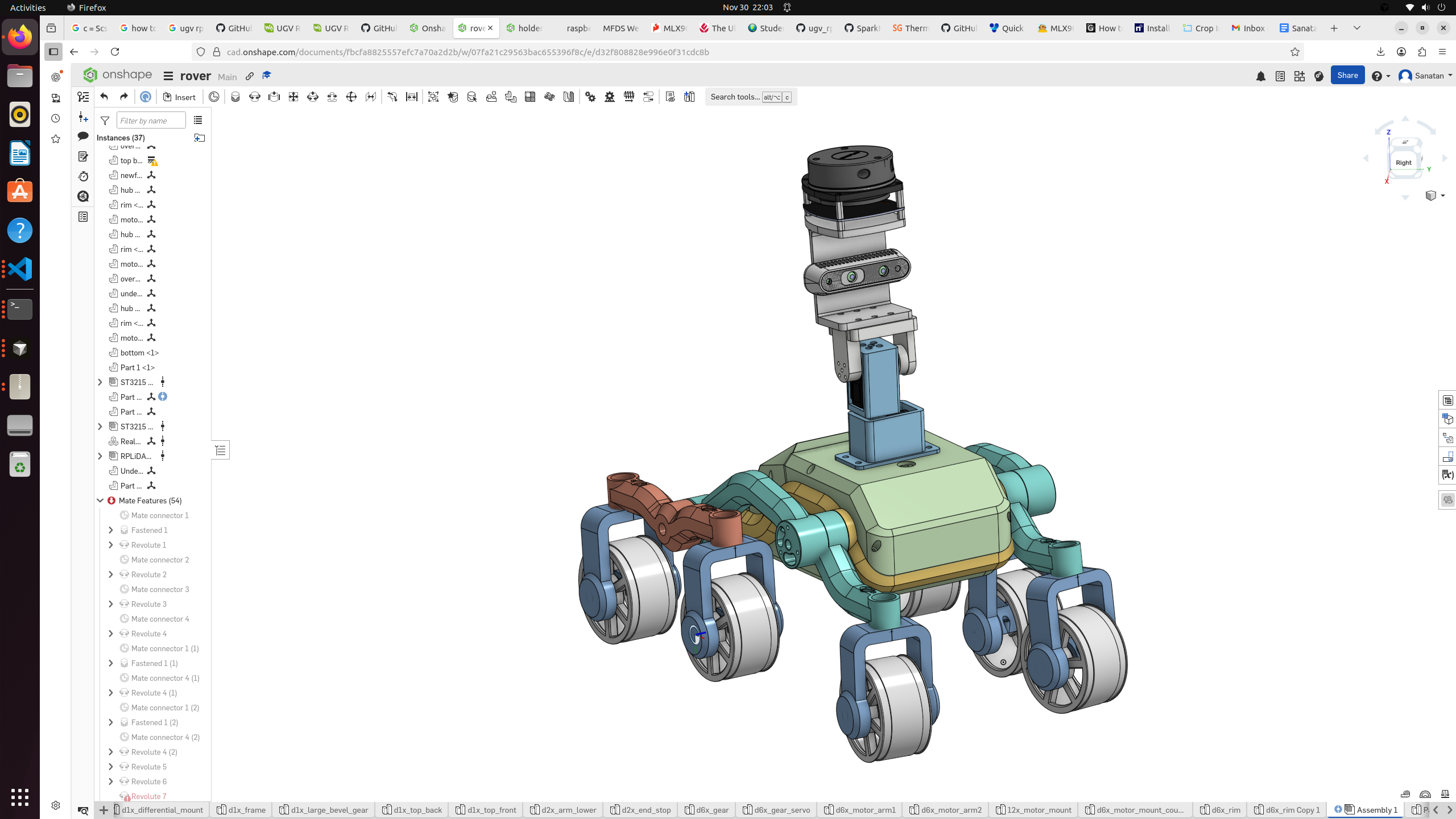
The project investigated how making a mobile fire detection system could be a big improvement in response time than the conventional fire alarm system. The goal of the project was to make a mobile fire detection system which could not only detect the fire or signs of fire but also give the status of the house and can be remotely controlled, even when away. There was a web browser based website which would constantly give the status of the house when there was no fire, but if there was fire or any sign of fire, there would be a notification.
The testing first occurred in the house, then if the majority of the time the system was able to detect the fire and then give the notification, the testing occurred in the forest. The rover (the part that made the system mobile) was capable of climbing up and down the stairs and had 6 wheels. Not only was the ability to detect and give a notification of the fire going to be tested, but also the rover's ability to climb the stairs was going to be assessed. Both of the factors determined if this system passed or didn't pass. Because the rover might be limited to being terrestrial, a further improvement that could be made so every area in the forest could be monitored, was making a drone that could get launched from the rover (which would be improved so that it could be used as a launchpad for the drone), and then do surveillance over the forest. For further improvement, a drone would be added so it could reach every part of the forest in which the rover cannot reach.
Keywords: Mobile fire detection system, rover, drone, fire alarm, surveillance
Problem Statement
As of now, the majority of the fires tend to occur in the kitchen and in dry forests which is a really big hazard. More than 40 percent of the fires occur due to leaving the kitchen unattended, and can lead to many devastating effects that are hard to recover (NFPA, 2025).
When the house is unattended, a fire alarm is ineffective. Even though the fire alarm is really loud, there is no notification system in order to notify the person if they are away, which makes it really hard to get an immediate response to the situation. Also fire alarms are not mobile and are not vision based, so the fire alarms may not be able to get to every single area giving the risk of the fire continuing to the fire alarm, which is when every object in its path is destroyed.
A solution is to make a mobile fire detection system that includes a stair-climbing rover and one robot arm that has multiple fire detection sensors and has a camera. Unlike fire alarms, this approach can use computer vision including a YOLO model to detect the fire or any signs of fire, so that it can be dealt with before the situation gets worse. (Florida Atlantic University, 2025). Most importantly, the fire alarms cannot send a notification to the person and only the people near the house can hear the alarm, so, a website will be made, which gives the video clip of the fire and then gives a notification. Then for quick action the website will automatically call the fire station.
Key Features
Dual Base Controllers: Primary and secondary motor controllers for six-wheel drive system
Rocker-Bogie Suspension: Advanced suspension system for rough terrain navigation
360° LiDAR Scanning: Slamtec RPLidar A1M8 for real-time 360-degree mapping
Computer Vision: OpenCV-based object detection, face tracking, and on-screen display
Fire & Smoke Detection: YOLOv8-based AI model for early fire and smoke detection
Gimbal Control: Two-axis pan/tilt gimbal with Feetech STS3215 servos
Steering System: Four servo motors for precise steering control
IR Temperature Sensor: Ambient and object temperature monitoring
Web-Based Control: Flask/SocketIO web interface for remote operation
Real-Time Video Streaming: Live camera feed with OSD overlay
Hardware Components
Chassis & Mobility
6-Wheel Drive System
Steering Servos: 4 serial bus servos (SCS-series)
Sensors
RPLidar A1M8: 360° 2D scanning LiDAR (12m range)
IR Temperature Sensor: MLX90614 (Ambient/Object)
Camera: USB camera for CV and streaming
CPU Temperature monitoring
Actuators & Computing
Gimbal Servos: 2x Feetech STS3215 (Pan/Tilt)
Steering Servos: 6x SCS-series for wheels
Raspberry Pi: Main control unit (Pi 4 or Pi 5)
2x ESP32: Lower-level motor/sensor control via UART
Software Architecture
Upper Computer (Raspberry Pi)
Flask Web Server
SocketIO Bidirectional Communication
OpenCV Image Processing
YOLOv8 Detection
Serial UART Communication
Lower Computer (ESP32)
Motor control
Sensor data collection
Low-level hardware interface
Web Interface Features
Movement Control: Joystick-style movement with speed control
Steering Control: Left/Right buttons for cumulative 5° adjustments
Lidar Control: ON/OFF buttons to start/stop 360° scanning
Gimbal Control: Pan and tilt sliders for camera positioning
Temperature Display: Real-time ambient and object temperatures
Video Streaming: Live camera feed with LiDAR point overlay
Virtual Keyboard: On-screen keyboard for touchscreen devices
Configuration & Mapping
The system uses udev rules for persistent device symlinks: